Case Summary: BioXcel Therapeutics Chapter 11
BioXcel Therapeutics filed for Chapter 11 after its sole approved product, IGALMI, never reached commercial scale and revenue could not support roughly $112 million of secured debt, pursuing a 363 sale to stalking horse Teva for $57.5 million cash plus up to $67.5 million in milestone payments.

A deck version of this summary is also available HERE.
Business Description
Headquartered in New Haven, CT, BioXcel Therapeutics, Inc. ("BioXcel" or the "Company") is a biopharmaceutical company built on artificial intelligence to develop medicines in neuroscience. Its model focuses on identifying new therapeutic indications for existing approved drugs and clinically evaluated product candidates, an approach designed to reduce the expense and time associated with drug development in diseases with substantial unmet medical needs.
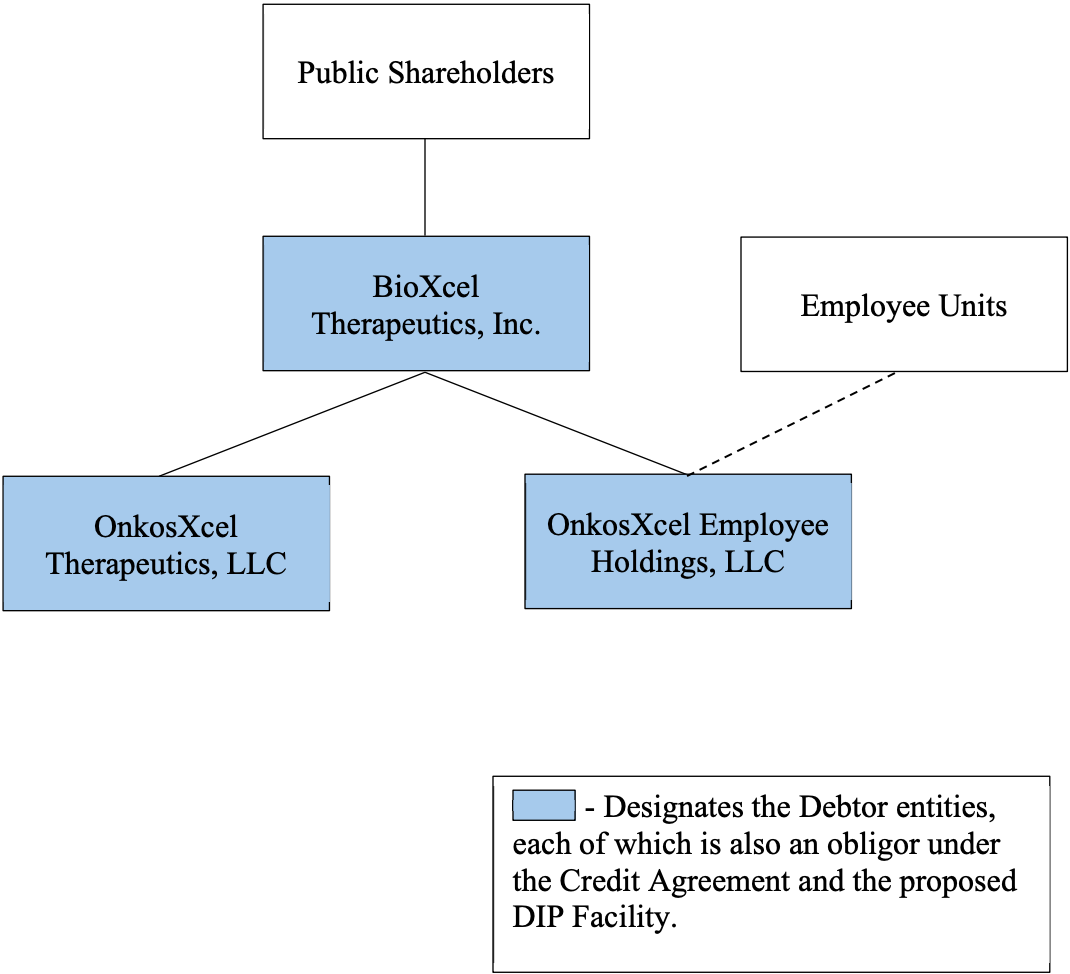
Debtor subsidiary OnkosXcel Therapeutics, LLC ("Onkos Therapeutics") houses the Company's immuno-oncology assets and programs, and is focused on the development of medicines in immuno-oncology, the treatment of cancer by activating the patient's own immune system against tumors. The third Debtor, OnkosXcel Employee Holdings, LLC ("Onkos Employee Holdings" and, together with Onkos Therapeutics, "OnkosXcel"), is a management holding company used to facilitate the grant of equity interests in OnkosXcel to service providers.
BioXcel's most advanced neuroscience program is BXCL501, a proprietary, orally dissolving film developed for the treatment of agitation associated with psychiatric and neurological disorders. BXCL501 is marketed as the FDA-approved product IGALMI, a sublingual film placed under the tongue or behind the lower lip to treat acute agitation in adults with schizophrenia or bipolar I or II disorder, and approved only for use under the supervision of a health care provider. IGALMI is the Company's sole approved and marketed product and the source of all of its revenue. Despite regulatory approval, IGALMI has not been able to reach commercial scale.
For the fiscal year ended December 31, 2025, the Company generated $0.6 million in revenue, down 72% year-over-year, with net loss widening to $69.9 million from $59.6 million in 2024. The Company attributes the decrease primarily to a reduction in bulk sales to existing customers, an increase in group purchasing organization discounts, and a reduction in commercial activities following workforce reductions.
BioXcel Therapeutics, Inc. and certain affiliates⁽¹⁾ filed for Chapter 11 protection on August 27, 2026 (the "Petition Date") in the U.S. Bankruptcy Court for the District of Delaware, reporting $10 million to $50 million in assets and $100 million to $500 million in liabilities.
⁽¹⁾ For a complete list of Debtor entities, see organizational structure chart below.
Corporate History
Formation and the BioXcel LLC Separation
BioXcel was incorporated in Delaware on March 29, 2017 as a subsidiary of BioXcel Corporation, later BioXcel LLC, which owns EvolverAI, the proprietary discovery engine on which the Company's platform was originally built. It was formed as a vehicle to develop four drug candidates that the parent still owned at the time, and two agreements dated June 30, 2017 moved those assets down and set the new subsidiary up to operate on its own. Under an asset contribution agreement, BioXcel LLC transferred its rights in all four — BXCL501, its immuno-oncology counterpart BXCL701, and two earlier-stage compounds, BXCL502 and BXCL702 — in exchange for stock and a series of cash payments.
The Company went public in March 2018, raising approximately $54.2 million in net proceeds, and traded on the Nasdaq Capital Market under the ticker BTAI until Nasdaq determined to delist the common stock on August 31, 2026 as a result of the Chapter 11 filing, with trading suspended at the opening of business on September 8, 2026.
April 2022 IGALMI Approval
The FDA approved IGALMI on April 5, 2022. Two weeks later, on April 19, the Company entered into a financing package with funds affiliated with Oaktree Capital Management and the Qatar Investment Authority, comprising a senior secured term loan facility of up to $135.0 million and a revenue interest financing agreement of up to $120.0 million, under which the purchasers advanced cash against a royalty on future BXCL501 sales. The first tranche under each was available only on the strength of the approval that had just been granted, with the remaining tranches contingent on regulatory milestones and minimum sales levels the product never reached. Both facilities are described in further detail below.
Organizational Structure
Operations Overview
The AI Platform Approach
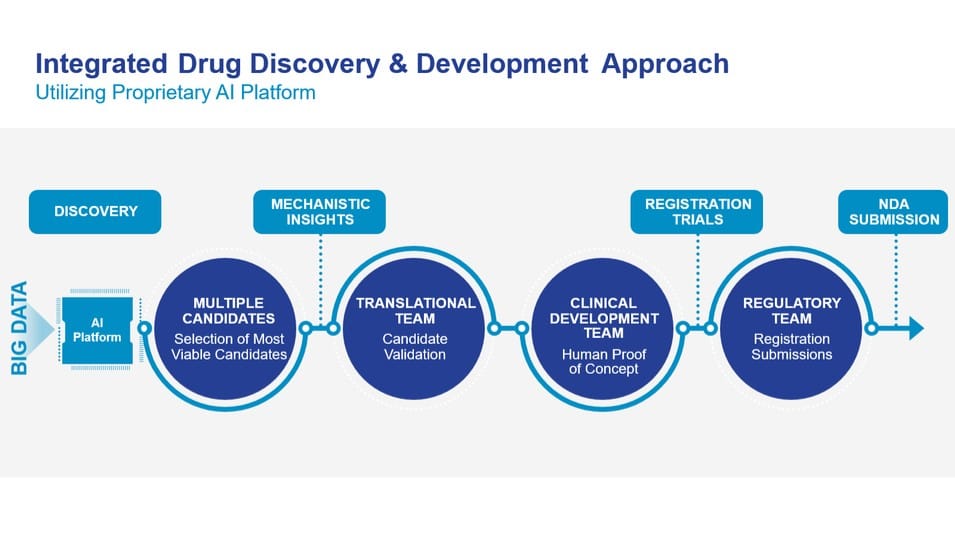
BioXcel's model is drug re-innovation: rather than discovering new molecules, it applies artificial intelligence to identify new therapeutic uses for drugs already approved or already tested in the clinic, an approach the Company believes reduces both the cost and the time of development. At the center is a labeled properties graph, or knowledge graph, that maps neuropsychiatric symptoms, brain circuits, drug targets and existing drugs as entities and relates them by their properties. Predictive algorithms run against that map are intended to surface not only single drugs with novel uses but new combinations. The Company screens candidates for characteristics suited to an efficient development path — existing human safety data, acceptable pharmacokinetics, and, for neuropsychiatric targets, structural features suggesting the compound will cross the blood-brain barrier. BioXcel's in-house capability has been complemented by EvolverAI, the proprietary discovery engine owned by its former parent, BioXcel LLC.
The platform produced the Company's pipeline, identifying dexmedetomidine and leading to the development of BXCL501, approved as IGALMI, as well as BXCL502, BXCL503 and BXCL504 and the immuno-oncology candidate BXCL701. Under the strategic clinical reprioritization the board approved in August 2023 (the "Clinical Reprioritization"), the Company deemphasized its drug re-innovation capabilities, and in the third quarter of 2025 it reduced its investment in and utilization of the AI platform. Its option to enter a broader EvolverAI collaboration with BioXcel LLC lapsed unexercised at the end of 2024, and BioXcel LLC has performed no development work for the Company since.
BXCL501 — Product and Pipeline
BXCL501 is an orally dissolving film formulation of dexmedetomidine, developed for the treatment of agitation associated with psychiatric and neurological disorders. It is the Company's most advanced neuroscience asset, and in the one use the FDA has cleared it is sold as IGALMI.
- IGALMI — The FDA approved IGALMI in April 2022 for the acute treatment of agitation in adults with schizophrenia or bipolar I or II disorder. It reached the market in July 2022 and may only be taken under the supervision of a health care provider. Sales run through Cardinal Health, which holds the finished product on consignment and distributes to wholesalers serving hospitals, psychiatric institutions and other healthcare facilities.
- IGALMI Commercialization Terms — IGALMI carries a list price, the wholesaler acquisition cost, from which a series of contractual deductions is applied to arrive at the revenue the Debtors actually recognize. On the illustrative sale described in the Debtors' customer programs motion, a unit listing at $1,050 sold to a hospital under a group purchasing organization contract yields net sales of approximately $441, or roughly 42% of list. The largest deduction, $525, is the chargeback that reimburses the wholesaler for the difference between the list price it was invoiced and the discounted price it is obligated to charge the hospital. The balance covers a $21 prompt payment discount and a $36.75 distribution fee retained by the wholesaler, a $10.50 reserve against future product returns, and a $15.75 administrative fee paid to the group purchasing organization. Most of these are settled by netting amounts owed in each direction rather than through separate cash payments; administrative fees and Medicaid and Medicare rebates are paid directly by the Debtors.
Apart from IGALMI, BXCL501 sits at the center of several development programs:
- The SERENITY Program — This program seeks to broaden the existing IGALMI approval so that patients can use the product at home, without a health care provider present. The Company filed a supplemental new drug application, or sNDA — the filing used to change the terms of an already-approved drug — on January 14, 2026, supported by a late-stage trial that met its primary safety objective in August 2025. The FDA accepted the application in April 2026 and has set a target decision date of November 14, 2026.
- The TRANQUILITY Program — This program evaluates BXCL501 for agitation associated with Alzheimer's dementia. A late-stage trial was completed by June 2023 with positive results, and the Company planned to seek an expanded label on that basis by the end of that year. Those plans were compromised when it emerged that the lead investigator overseeing the trial had fabricated email correspondence with the FDA in response to an inspection at one of the clinical sites. The Company investigated, including a third-party audit that found no evidence of further misconduct or of anything affecting the integrity of the data. A second late-stage trial has been discussed with the FDA but has not been started, which the Company attributes to its liquidity position.
- Government-Funded Research — Beyond its own trials, BioXcel participates in studies of BXCL501 run by outside institutions, including the Veterans Affairs Connecticut Healthcare System, Yale University Medical School, RTI International, Columbia University New York State Psychiatric Institute, and the University of North Carolina at Chapel Hill. Those studies are funded through cooperative agreements with the U.S. Department of Defense's Congressionally Directed Medical Research Program and the National Institute on Drug Abuse, and are testing the drug in opioid use disorder, alcohol use disorder with co-occurring post-traumatic stress disorder, and acute stress disorder. The sponsoring institutions lead the trials; BioXcel supplies the study drug along with regulatory and operational support.
Other Pipeline Candidates
Beyond BXCL501, the Company's platform has produced several candidates whose development has been paused under the Clinical Reprioritization.
- BXCL701 — Held through Onkos Therapeutics, an experimental oral drug intended to prompt the immune system to attack tumors that would otherwise evade it, studied in aggressive forms of prostate cancer, pancreatic cancer, and other tumor types. It received FDA Fast Track designation in February 2024 — a status that speeds review — for use in combination with an immunotherapy drug in a rare form of advanced prostate cancer. The two remaining university-run trials closed in 2025 without advancing.
- BXCL502 (Latrepirdine) — A second neuropsychiatric candidate the Company had planned to evaluate on its own, and possibly alongside BXCL501, for chronic agitation in dementia patients and for acute stress disorder.
- BXCL503 and BXCL504 — Two additional concepts identified by the Company's platform, explored as potential treatments for apathy and aggression respectively in dementia patients.
Intellectual Property
As of August 3, 2026, the Company's neuroscience patent portfolio comprised 17 issued U.S. utility patents and 13 pending U.S. utility applications, 29 allowed or granted non-U.S. patents and 41 pending non-U.S. applications, together with one pending U.S. design patent application and two registered design patents in Japan. Within the formulation family covering the sublingual film, patents have been granted or allowed in the United States, China, Europe, Eurasia, Japan and Mexico, with applications pending in the United States, China and other major markets.
Manufacturing
BioXcel does not own or operate manufacturing facilities, relying instead on third-party partners for both its clinical supplies and the commercial supply of IGALMI, and expects to continue doing so for any future approved products. ARx, LLC has agreed to manufacture and supply the dexmedetomidine film used for commercial sales of IGALMI and for ongoing clinical trials of BXCL501, subject to certain alternative supply provisions.
Prepetition Obligations
The Debtors' funded debt consists entirely of a single senior secured facility. On April 19, 2022, two weeks after FDA approval of IGALMI, BioXcel entered into a credit agreement and a revenue interest financing agreement (the "RIFA") with funds affiliated with Oaktree Capital Management and the Qatar Investment Authority to support the commercial launch of IGALMI, expansion of clinical development of BXCL501, and general corporate purposes.
The credit agreement provided a first-lien senior secured delayed-draw term loan facility of up to $135 million. The RIFA provided a further $120 million against a capped revenue interest in IGALMI sales, priced as a royalty ranging from 7.75% to 0.375% of U.S. net sales, subject to a hard cap of 175% of the amount funded and a call option at 1.225x to 2.25x of invested capital. BioXcel drew $70 million under the term loan and received $30 million under the RIFA in April 2022. The RIFA was subsequently terminated and the $30 million drawn under it exchanged for term loans in the same amount, leaving the credit agreement as the Company's sole funded debt instrument.
BioXcel is the borrower under the term loan facility, and both OnkosXcel entities guarantee its obligations. The facility is secured by a first lien on substantially all of the Debtors' assets, including a pledge of BioXcel's equity in both subsidiaries. Under amendments entered into between June and August 2026, the lenders agreed to defer until August 31, 2026 the principal and interest payment that would otherwise have come due on June 30, 2026, with the interest component paid in kind and capitalized to principal on that date. On August 24, 2026, the parties agreed to a further amendment providing, among other things, $1.25 million of secured bridge financing to fund the Debtors' preparation for these Chapter 11 Cases.
The loans mature on April 19, 2027 and currently bear interest at a fixed annual rate of 13.0%, payable quarterly in cash. BioXcel previously had the ability to elect payment-in-kind interest through June 30, 2025, which resulted in certain interest payments being capitalized and added to principal. Approximately $112 million remained outstanding under the facility as of the Petition Date.
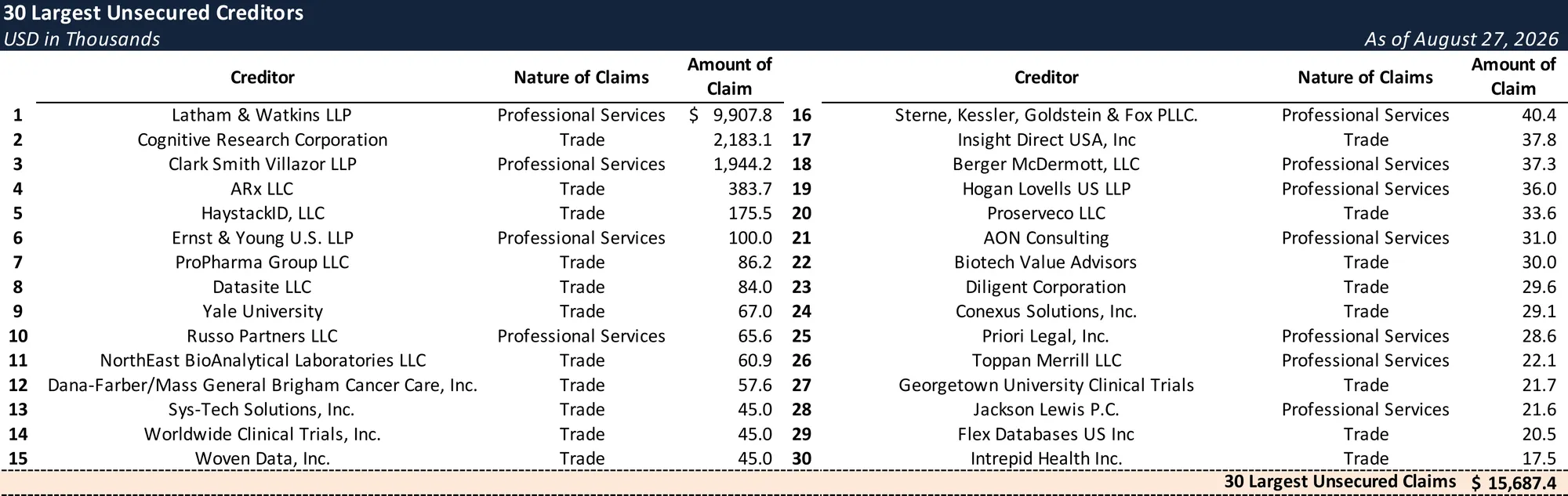
Beyond the funded debt, the Debtors estimate approximately $17 million in unpaid trade and other ordinary course obligations as of the Petition Date, much of which represents amounts owed to existing or former professionals.
Top Unsecured Claims
Events Leading to Bankruptcy
BioXcel obtained an FDA approval and launched a commercial product, and entered Chapter 11 weeks before a regulatory decision capable of transforming the market for that product. What failed in between was the capital structure. Product revenue never exceeded $2.3 million in any year, and the Debtors state that those levels were not sufficient to cover operating expenses, debt service and clinical development costs; scaling back the commercial organization to preserve cash then suppressed sales further. Against that, a growth financing hardened into a 13% secured obligation carrying amortization, liquidity covenants and, in the final year, lender control over the strategic process.
The June 2023 TRANQUILITY Disclosure
BioXcel ran its Phase 3 TRANQUILITY trial between 2022 and 2023, testing BXCL501 for agitation associated with Alzheimer's dementia — an indication that would have substantially expanded the commercial opportunity for IGALMI. The Company contracted the trial out to an independent contract research organization, as most drug sponsors do.
In December 2022, the FDA inspected one of the trial sites, where the principal investigator had enrolled roughly 40% of the study's subjects, and issued a Form 483 citing three observations against him: failure to follow the approved consent form, incomplete case histories, and departures from the protocol including a late report of a patient's serious adverse event. In May 2023, the Company learned that the same investigator, who was not and never had been a BioXcel employee, may have fabricated emails purporting to show that he had timely reported a different patient's adverse event to the Company's safety monitoring vendor. BioXcel confirmed the fabrication and determined that the emails had reached FDA inspectors during the December visit.
On June 29, 2023, the Company announced positive topline results from the trial and disclosed the conduct at the site in the same statement. The share price fell approximately 64% in a single day and has not recovered. The Debtors state that the episode significantly impaired their ability to raise the equity financing needed to complete the SERENITY approval process and restart TRANQUILITY, and that several lawsuits remain pending against the contract research organization and others responsible for the trial.
The Clinical Reprioritization and Headcount Reduction
In August 2023, recognizing that its cash and financing resources could not simultaneously fund the breadth of its clinical pipeline, its commercial operations and its debt service, BioXcel's board approved the Clinical Reprioritization. The announcement on August 14, 2023 concentrated the Company's resources on the agitation market and, in particular, on developing BXCL501 for at-home use — the SERENITY program that produced the sNDA now pending before the FDA — while pausing or deprioritizing programs that would require significant additional investment. Those included the TRANQUILITY Phase 3 program, BXCL502, the BXCL503 and BXCL504 pipeline concepts, and further development of BXCL701.
As part of the same reprioritization, the Company cut its workforce by approximately 60%, from roughly 190 employees to 80, closing 2023 with 74 employees. Reductions continued through 2024 and 2025, leaving 29 employees at December 31, 2025. An additional four departed prior to the Petition Date, bringing headcount to 25 at filing.
The Amendment Cascade
Operating performance never allowed BioXcel to comply with the credit agreement's financial covenants or meet its payment obligations, and the facility was amended repeatedly between November 2023 and August 2026. Some notable amendments include:
- Fifth Amendment (November 21, 2024) — Pricing moved from SOFR + 7.5% to a fixed 13.0% retroactive to September 30, 2024, and in exchange for waivers, BioXcel made a $2.5 million principal payment and took on quarterly amortization of 5% of funded principal beginning March 31, 2026. The collateral package widened at the same time: Onkos Therapeutics and Onkos Employee Holdings, until then unsecured guarantors, granted liens over substantially all of their assets, and the Company gave up its flexibility to dispose of OnkosXcel or out-license its intellectual property.
- Ninth Amendment (March 27, 2026) — Waived the going-concern qualification in the FY2025 audited financial statements and cut minimum liquidity to $12.5 million. The price was a $2.5 million prepayment and warrants over 1,354,000 shares at $0.01, which the lenders exercised on a cashless basis weeks later.
- Tenth Amendment (July 3, 2026) — The transition to a restructuring posture. Alongside deferring the payment due June 30 and cutting minimum liquidity to $7.5 million, the lenders required a definitive strategic transaction on terms acceptable to them, a strategic process committee holding exclusive authority over any sale or restructuring, weekly meetings with lenders, and rolling thirteen-week cash-flow reporting.
- Fourteenth Amendment (August 24, 2026) — Three days before the filing, the lenders advanced $1.25 million of secured bridge term loans against a $250,000 upfront fee, or 20% of the new principal, cut minimum liquidity to $250,000 from $3.0 million, and removed what remained of the Company's ability to out-license intellectual property or sell assets. The bridge was sized to fund preparation for these cases and was rolled into the postpetition facility.
Litigation and Regulatory Overhang
The June 2023 TRANQUILITY disclosure produced a wave of securities litigation and a regulatory investigation, most of which remains unresolved at the Petition Date.
- Securities Class Action — A class action filed in the District of Connecticut in July 2023 alleges that the Company and certain executives made false or misleading statements about the TRANQUILITY trial and the development of BXCL501 for Alzheimer's-related agitation. The court dismissed an earlier complaint without prejudice but allowed certain claims to proceed in September 2025, and the parties settled for $9.75 million, funded entirely by the Company's insurance carriers. Preliminary approval came on March 2, 2026 and the carriers funded the settlement escrow that month, though no amounts will be released before the final approval hearing, scheduled for September 2, 2026 — six days after the Petition Date.
- SEC Investigation — The Company became aware in February 2024 that the SEC had opened a formal investigation into the Company and certain directors and officers, covering its public disclosures — including statements about product sales and the Form 483 issued to an investigator at a TRANQUILITY trial site — as well as trading in the Company's securities. Current and former officers and employees have testified, and the Company states that it cannot predict whether the SEC will institute proceedings or what the outcome would be.
- Derivative Actions — Eight stockholder derivative complaints have been filed on the Company's behalf against its directors and officers, alleging business torts and Exchange Act violations, now consolidated into five pending matters: consolidated actions in Connecticut and Delaware federal court, an action in the Delaware Court of Chancery, and two further Connecticut suits filed during 2026. All are stayed — the earlier actions pending resolution of the class action, the 2026 cases for 90-day periods.
The Prepetition Strategic Process
Through late 2025 and into 2026, BioXcel pursued a strategic review on two tracks: raising new equity to carry the Company to FDA approval of the at-home label expansion, and identifying an acquirer or partner for the business or its assets. The Company engaged MTS Health Partners as investment banker in the fall of 2025 and Rodman & Renshaw as placement agent, and the two ran a broad process, contacting over 40 potential acquirers and more than 40 potential financing partners. Several engaged in diligence, and a registered direct offering in March 2026 raised approximately $6.9 million to fund operations while the process continued.
The balance sheet proved the obstacle. The Debtors state that the magnitude of the secured debt relative to enterprise value made it difficult for any counterparty to structure an out-of-court transaction that would satisfy existing creditors, fund ongoing operations and still leave value for equity holders. Teva ultimately emerged as the most viable bidder, conducting extensive diligence on the Company's assets and regulatory portfolio before submitting a non-binding letter of intent to acquire substantially all of them through a section 363 sale. With the board and the Strategic Process Committee concluding that a sale offered greater certainty of closing than a standalone financing, BioXcel executed a stalking horse agreement providing $57.5 million in cash at closing, plus up to $67.5 million in contingent payments tied to the outcome of the pending sNDA and future commercial performance.
The Chapter 11 Filing
The Stalking Horse APA
The Debtors filed a bidding procedures motion on August 28, 2026, with a stalking horse asset purchase agreement among all three Debtors as Sellers and Teva Pharmaceuticals International GmbH attached. Teva would acquire substantially all of the Debtors' assets, principally the intellectual property and patent portfolio behind BXCL501 and the other programs, all FDA filings and correspondence including the pending sNDA, the clinical and preclinical data, the finished goods inventory, and the accounts receivable. Teva Pharmaceutical Industries Limited joined the agreement solely to guarantee the milestone payments.
- Upfront Payment — $57.5 million in cash from Teva at closing, plus assumption of the Assumed Liabilities. Teva placed a $5.75 million good faith deposit into escrow within two business days of signing; that deposit is credited toward the $57.5 million rather than paid on top of it, and any cure costs above the $2.5 million Cure Costs Cap further reduce what Teva pays at closing.
- Development Milestone Payment — A single payment from Teva tied to sNDA approval: $67.5 million if approval comes on or prior to November 21, 2026; $55 million if approval comes after November 21, 2026 but on or before February 28, 2027; $20 million if approval comes after February 28, 2027 but on or before May 31, 2027; and $5 million if approval comes after May 31, 2027 but on or before November 30, 2027. Only one is ever payable, and it may be owed after the cases conclude.
- Commercial Milestone Payments — A sales-based alternative that applies only if sNDA approval is not received on or prior to February 28, 2027. Teva would pay the Debtors $10.0 million in the first year in which net sales of the at-home product reach $250.0 million, and a further $10.0 million at $500.0 million, in each case on or prior to December 31, 2035. Neither is payable if either of the two highest Development Milestone tiers is achieved.
- Offset — Teva may deduct from any unpaid milestone half of what it or its affiliates pay a third party after closing for intellectual property necessary to exploit the at-home product, though no milestone may be reduced by more than 50%.
- Milestone Product — The milestones run only on the at-home product pending under the sNDA. The Approved Hospital Product, IGALMI as currently approved for use in a healthcare setting, is excluded, so existing institutional sales generate no milestone consideration.
- No Diligence Obligation — Teva makes no guarantee that any milestone will be achieved, has no obligation to make any level of efforts toward one, and may exploit the purchased assets as it deems appropriate in its sole business judgment. The parties state their intent that the provision supersede any standard of efforts or implied covenant of good faith and fair dealing. A narrow covenant bars material action or omission primarily intended to delay or avoid a payment, with disputes resolved exclusively by binding JAMS arbitration in New York.
- Material Adverse Effect — The definition carves out both an unfavorable FDA response on the sNDA, including a complete response letter, and any collapse in the stock price or loss of the Nasdaq listing, so neither event on its own would let Teva walk away. The FDA carve-out falls away if the setback traces to wrongdoing, fraud or a willful and material failure on the Company's part. With no FDA-approval condition and no antitrust condition to closing, Teva carries the regulatory risk rather than the estate.
Because the two contingent components are largely mutually exclusive, the maximum aggregate consideration is $125 million and the maximum contingent component is $67.5 million rather than $87.5 million, consistent with the Debtors' own Local Rule 6004-1 disclosure stating the price as the Upfront Payment plus up to $67.5 million in milestone payments.
Bidding Procedures and Bid Protections
The Debtors state that designating a stalking horse was itself a requirement of securing the DIP financing, and that the sale milestones were agreed with the DIP Lenders. Those milestones run to entry of the Bidding Procedures Order on September 24, a bid deadline of October 9, an auction on October 14, the sale hearing and entry of the Sale Order on October 21, and closing on October 26.
- Break-Up Fee — $1.15 million if the FDA has not approved the sNDA before the agreement terminates, rising to $5.0 million if it has, though the fee counts as $1.15 million for purposes of assessing bids and running the auction. Together with an expense reimbursement of up to $575,000, the protections are superpriority claims ranking behind the DIP lenders' claims and the Carve Out. The Debtors state they represent 3% of the Upfront Payment, which is exact at the base tier and not at the elevated one.
- Minimum Bid — A competing bid must beat Teva on both halves of the price. On cash, it must exceed $60.2 million at closing, being the $57.5 million Upfront Payment plus the $1.725 million of bid protections and a $1.0 million overbid increment. On the contingent side, it must offer milestone or other deferred payments that the Debtors judge to be worth at least as much as Teva's when combined with that overbid.
Two consent rights sit above that process. Choosing any Successful or Backup Bid other than Teva's requires the DIP Agent's prior written consent, unless the bid both pays the DIP and remaining prepetition secured obligations in full in cash at closing and closes by a date not materially later than the Outside Date of October 30, 2026. Separately, any modification affecting the terms of the stalking horse agreement, or materially affecting the assets, requires Teva's prior written consent in its sole discretion under the motion.
The $77.25 Million DIP Facility
The Debtors received interim approval on August 31, 2026 for a multi-draw senior secured superpriority priming term loan DIP facility of up to $77.25 million, comprising $19.0 million of new money and $58.25 million of roll-up of prepetition loans. Oaktree Fund Administration, LLC serves as DIP Agent, and the DIP Lenders are the same Oaktree and Qatar Investment Authority funds behind the prepetition term loan. BioXcel Therapeutics is the borrower, with both OnkosXcel entities guaranteeing on a joint and several basis.
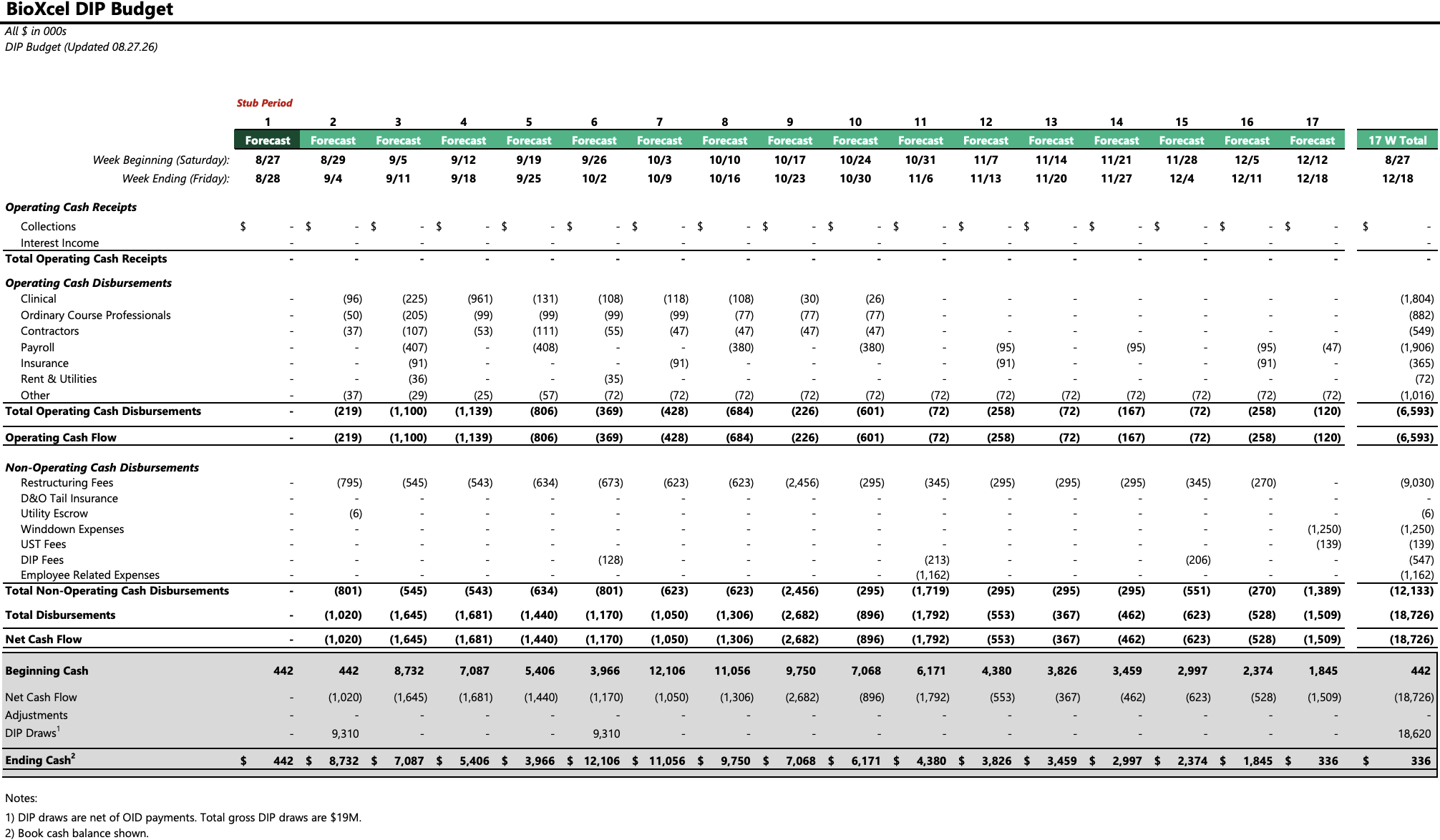
- New Money — $19.0 million, funded in two equal draws of $9.5 million: the first on entry of the interim order, the second on entry of the final order. Draws are net of original issue discount, and the budget shows $9.31 million landing against each.
- Roll-Up — $58.25 million of prepetition obligations convert into DIP loans, each tranche funding alongside the corresponding new money draw. The interim roll-up of $29.75 million converts the $1.25 million bridge advanced three days before filing plus $28.5 million of other prepetition obligations; the final roll-up converts a further $28.5 million.
- Pricing — 13.0% per annum. Interest on the new money is payable in cash; interest on the roll-up loans is capitalized to principal. A 4.0% exit fee applies to any repayment, voluntary or involuntary.
- Maturity — January 27, 2027, five months after the Petition Date.
- Carve Out — Professional fees allowed before a Carve Out Trigger Notice, plus a post-notice cap of $725,000 covering the Debtors' and any committee's professionals combined, with no separate committee allocation. The Debtors must fund a segregated professional fees account weekly.
- Challenge Period — Parties in interest have 75 days from entry of the interim order to challenge the Debtors' stipulations as to the validity, priority and amount of the prepetition liens and obligations, including the roll-up. A committee's investigation is capped at $25,000; no committee has been appointed.
- Credit Bidding and Sale Proceeds — The DIP Agent may credit bid the full amount of the DIP obligations, roll-up loans included, in any sale of the collateral. The proposed bidding procedures order would suspend that right for as long as the Teva agreement is on foot and Teva is not in material breach, barring both the DIP and prepetition secured parties from credit bidding on any asset subject to the stalking horse bid. Repayment from a sale is not a fixed sweep: for a sale of substantially all assets, the amount applied is set by an Agreed Wind-Down Budget to be negotiated with the required lenders before closing.
Key Employee Retention and Incentive Programs
With headcount down to 25 at filing and the pending sNDA the estate's principal asset, the Debtors sought approval of a key employee retention plan and a key employee incentive plan, both approved by the board. Together they cover 24 of the 25 remaining employees. Neither pays anything unless a sale of substantially all assets closes, and both are funded exclusively from sale proceeds.
- KERP — Covers the 20 non-insider employees for $0.6 million in the aggregate, or an average of 11.7% of base salary. The Debtors identify fifteen of the twenty as critical to shepherding the sNDA through FDA approval, the event that determines whether the estate collects the largest tranche of the Teva purchase price.
- KEIP — Covers the four senior managers who are insiders: Vimal Mehta as CEO, Javier Rodriguez as Chief Legal Officer, Richard Steinhart as CFO and Frank Yocca as Chief Scientific Officer. Awards are expressed as percentages of 2026 base salary and scale across five bands of a Transaction Value Metric, defined as cash received at closing plus cash paid on the contingent value rights above $55 million. The CVRs are the Teva milestone payments — the Development Milestone keyed to FDA approval of the sNDA and the Commercial Milestones keyed to net sales of the at-home product. The $55 million figure is a deductible rather than an eligibility floor, so only milestone dollars beyond it count toward the metric. The base band runs from $57.5 million, matching the Teva Upfront Payment exactly, to $75 million, and pays 25% of base salary to the CEO and 17.7% to 18.1% to the others, or roughly $0.5 million in the aggregate. The top band, at $150 million and above, pays 120% to the CEO and 107.5% to the others, or roughly $2.6 million.
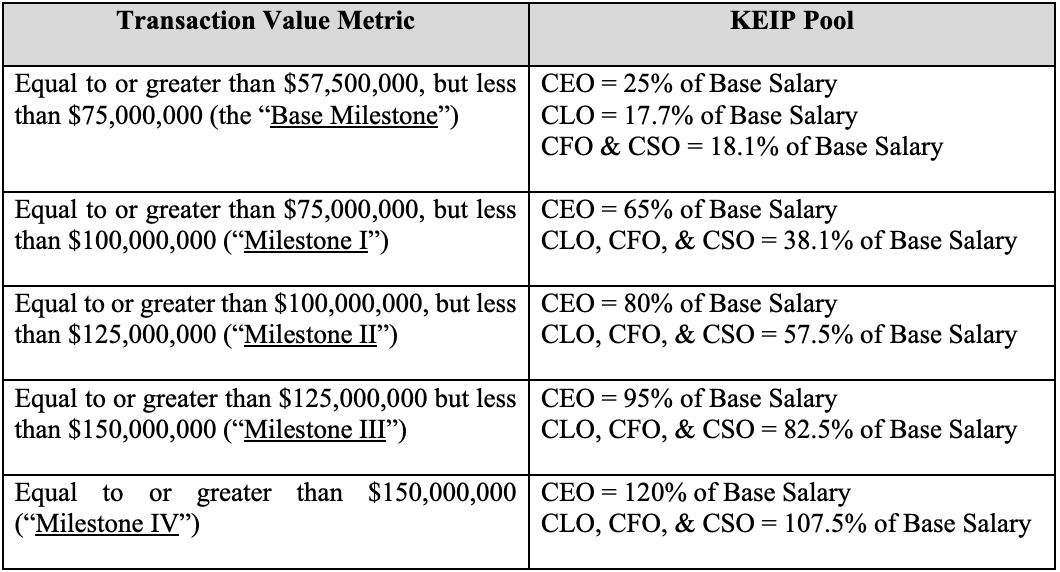
Applied to the stalking-horse terms, the KEIP scale compresses to its bottom band. Closing cash is fixed at $57.5 million, so the only variable is how much milestone money clears the $55 million deductible. The best case is FDA approval on or prior to November 21, 2026, which triggers the $67.5 million Development Milestone tier; $55 million of that is absorbed by the deductible and $12.5 million counts, producing a Transaction Value Metric of $70 million. Every other approval date produces a metric of exactly $57.5 million, because no other milestone outcome clears the threshold: the second tier pays $55 million, which does not exceed $55 million and therefore contributes nothing, and the third and fourth tiers pay $20 million and $5 million.
Explore Bondoro Insights for live case dockets and comprehensive coverage of material filings from petition to plan confirmation.
Stay informed on every Chapter 11 bankruptcy case with liabilities exceeding $10 million. Subscribe for free to have our coverage delivered directly to your inbox, and explore our full archive of past summaries.
Subscribers can also opt in to timely filing alerts by updating their email preferences in Account Settings.


